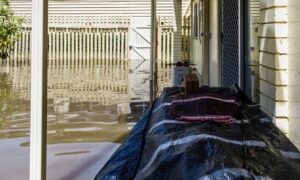
Many homeowners check their FEMA flood zone online and assume the map tells the whole story. It doesn’t. A FEMA map is only a starting point, and the real answer comes from accurate elevation data measured on your property. That is why an elevation certificate matters so much. It connects your home to Monroe County’s official survey system, which gives you the most reliable way to confirm your true flood risk.
Understanding this process may sound complicated, but it becomes simple once you know how local survey benchmarks, easements, and drainage patterns work together. When you follow the right steps, you can confirm your flood zone with confidence—and even challenge it if the maps are outdated.
Why County Survey Monuments Matter More Than Most People Realize
Before any surveyor measures your home’s height, they must start from a known “control point.” In Monroe County, these control points are part of a huge network of geodetic monuments. There are more than 5,700 of them across the county. Each monument has a recorded elevation that never changes, even when maps or flood studies do.
Your elevation comes from tying your home back to one of these monuments. Think of it like measuring your height with a ruler that never moves. Without a solid reference point, the numbers on your certificate would be unreliable, and FEMA depends on accuracy. If your surveyor uses the wrong benchmark—or no benchmark at all—your elevation could appear higher or lower than it truly is. That can change your FEMA flood zone classification and your insurance costs.
This is why local monument network is the backbone of every accurate Elevation Certificate.
How to Access Monroe County Benchmarks and Easements
Monroe County’s GIS portal is one of the best tools for homeowners. When you pull up your parcel, you can see:
- Nearby geodetic monuments
- Drainage easements
- Creeks, channels, and low-lying areas
- Highway right-of-way information
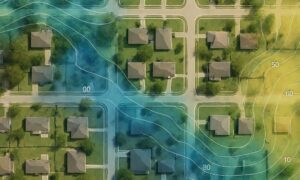
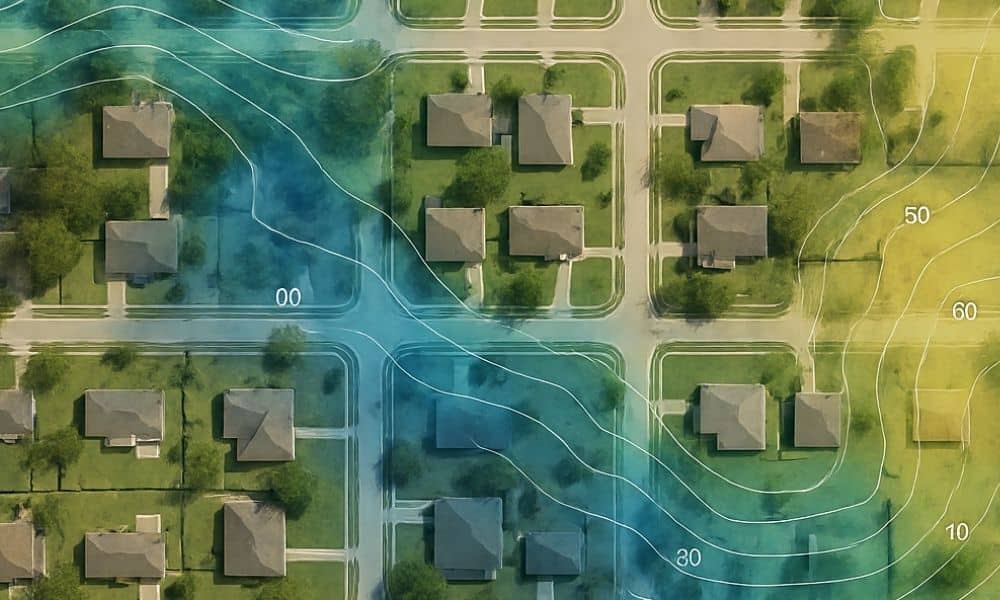
Most homeowners focus only on the FEMA flood map, but this local data fills in the gaps. For example, a property might look safe on the FEMA layer, yet a county drainage easement behind the home may show why water flows toward the lot. In other cases, the opposite can be true. A property may sit near a mapped flood area, but the county benchmark data shows that the building sits higher than the surrounding land.
This is why it helps to look at both FEMA maps and county survey information. Together, they paint a clearer picture of the land beneath your home.
How Surveyors Use Benchmarks to Determine Your Actual Elevation
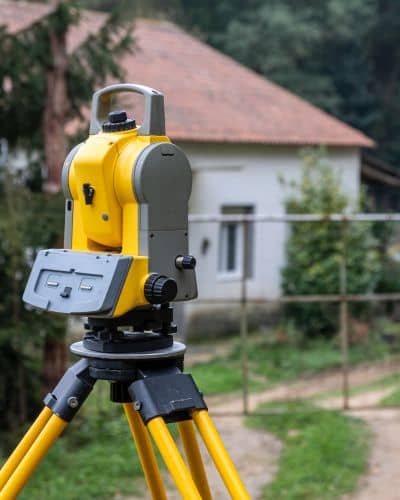
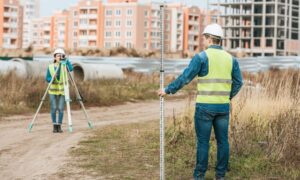
When a licensed surveyor measures your property, they bring field equipment that reads angles, distances, and heights. However, these measurements alone mean nothing without a starting point. That starting point comes from a nearby monument with a known, permanent elevation.
Here’s how the process works in simple terms:
- The surveyor finds a county monument and checks the tie-sheet.
- They confirm the official elevation written by Monroe County.
- They measure from that monument to your home’s foundation.
- They calculate your exact structure elevation based on the monument.
Once this is done, the numbers go onto your Elevation Certificate. Now you have official data tied to the county’s control network—not just a guess based on maps.
Because FEMA bases flood zones on water heights (Base Flood Elevations), using correct vertical control is the key to getting the right answer.
How to Use Your Elevation Certificate to Confirm Your FEMA Flood Zone
After you get your Elevation Certificate, compare your home’s elevation to the Base Flood Elevation (BFE) for your area. The BFE is the height floodwaters are expected to reach during a major storm.
Here’s the simple way to interpret your results:
- If your home sits higher than the BFE, your flood risk is lower.
- If your home sits at or below the BFE, FEMA may keep you in a flood zone.
Sometimes the certificate shows that the FEMA map is outdated, especially in older neighborhoods or areas where grading has changed. When the numbers don’t match what FEMA shows, the Elevation Certificate becomes your proof. Many homeowners use it to request a Letter of Map Amendment (LOMA) so FEMA can correct their flood zone.
This process can lower insurance costs and give you peace of mind. More importantly, it replaces guesswork with real data.
Why Easements and Drainage Paths Matter in Flood Zone Verification
Your property’s flood risk is influenced by more than just height. County easements often reveal drainage channels that FEMA maps overlook. For example, a backyard might not be inside a FEMA flood zone, yet it sits along a drainage easement that collects storm runoff. That area might stay wet or experience pooling even though it isn’t technically a FEMA hazard zone.
On the other hand, some homes near mapped flood zones sit on elevated pads or ridges. If your Elevation Certificate shows that your house is well above the nearby easement or creek, it strengthens your case for correcting your FEMA zone.
Looking at easements helps you understand the bigger picture: where water comes from, where it travels, and how the land around your home behaves during storms.
Smart Questions to Ask Your Surveyor Before They Start
If you’re ordering a new Elevation Certificate, ask your surveyor a few direct questions. These questions help ensure your certificate is accurate, not just acceptable:
- “Which monument will you use?”
- “What vertical datum will the certificate reference?”
- “Can I see the benchmark tie-sheet for my records?”
- “How does my home’s elevation compare to nearby easements or low spots?”
Most surveyors appreciate informed clients, and these questions show you’re serious about getting reliable data.
DIY Checking vs. Hiring a Professional
You can look at FEMA maps, county GIS layers, and aerial photos on your own. This gives you a basic idea of your risk. However, confirming your exact FEMA flood zone requires a professional survey tied to a county benchmark.
Here’s why: FEMA makes broad maps. Surveyors measure your actual home. And because Monroe County’s benchmark system is so precise, the certificate can reveal details that maps simply miss.
If you want a confident, exact answer—not an estimate—there’s no substitute for a well-done Elevation Certificate.
Final Thoughts
Confirming your FEMA flood zone isn’t just about checking a map. It’s about understanding how your home sits within Monroe County’s landscape. When you combine an Elevation Certificate with county benchmark data and drainage information, you get the most accurate picture of your flood risk.
Whether you’re planning improvements, buying a home, or questioning your current flood zone, start with good data. FEMA maps give you a clue, but the survey system gives you the truth.