Neighbor property disputes rarely start big. Instead, they begin with something small. A fence goes up a few feet off. A tree gets cut. A driveway crosses an invisible line. Then voices rise, screenshots appear, and both sides feel sure they are right. However, feelings and online maps do not settle boundary fights. Real land surveying evidence does.
Many homeowners believe they already have proof. They pull up a county map, a tax parcel viewer, or a satellite image. Unfortunately, those tools only show rough estimates. They do not show legal boundaries. Therefore, when a dispute grows serious, only certain types of land surveying evidence actually hold up.
Why Most Property Line Arguments Go in Circles
Most neighbor disputes follow the same pattern. One person says, “The map shows this is mine.” Meanwhile, the other says, “The fence has always been here.” Both sides bring printouts. Neither side brings legal boundary proof.
Online parcel maps cause many of these fights. They look official, so people trust them. However, parcel maps exist for tax and planning use — not legal boundary decisions. They often shift by several feet. In older neighborhoods, they can shift even more.
Also, many owners trust visible features. For example, they trust fences, hedges, or old stakes. Yet builders and past owners often placed those items without measurement. So they show occupation — not ownership.
As a result, arguments keep looping because neither side uses true land surveying evidence.
What Counts as Real Land Surveying Evidence
Strong boundary proof comes from a clear process. A professional does not guess. Instead, they research records, inspect the site, and measure carefully. Each step builds reliable land surveying evidence.
First, surveyors study the deed and legal description. That document lists bearings, distances, and boundary calls. Next, they review subdivision plats and past surveys. These records show how the land first got divided.
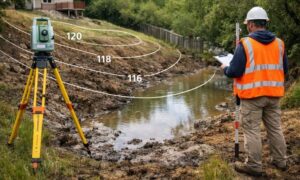
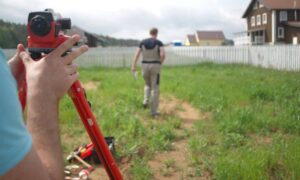
Then comes field work. The surveyor searches for boundary monuments. These include iron pins, pipes, rods, stones, and marked points. Courts often treat monuments as the strongest boundary indicators. So when a surveyor finds them, they matter more than map lines.
Finally, the surveyor compares records with field findings. That comparison creates a boundary retracement. Therefore, the final survey reflects both law and measurement — not just one or the other.
Evidence That Feels Strong — But Usually Fails
Many things look convincing but fail under challenge. Homeowners often rely on them anyway. That mistake creates risk.
For example, GIS maps look detailed. However, they come with accuracy limits. Counties even publish disclaimers about them. Likewise, real estate listing sketches show shapes, not legal lines.
Builder drawings also cause confusion. They show design layout, not certified boundaries. The same goes for contractor tape measurements. A quick tape pull cannot replace land surveying methods.
Old surveys create another trap. People find a faded copy and assume it still controls. Yet conditions change. Monuments move. New records appear. Therefore, a surveyor must verify old work before anyone relies on it.
So while these items help with background, they rarely win disputes.
The Most Common Fight: Trees and Fences
Across the country, tree and fence conflicts appear again and again. One neighbor removes trees near a line. The other claims trespass. Or someone builds a fence based on guesswork. Trouble follows fast.
These cases feel personal because they affect daily life. Shade disappears. Privacy changes. Property value feels threatened. Therefore, emotions rise quickly.
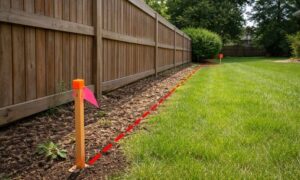
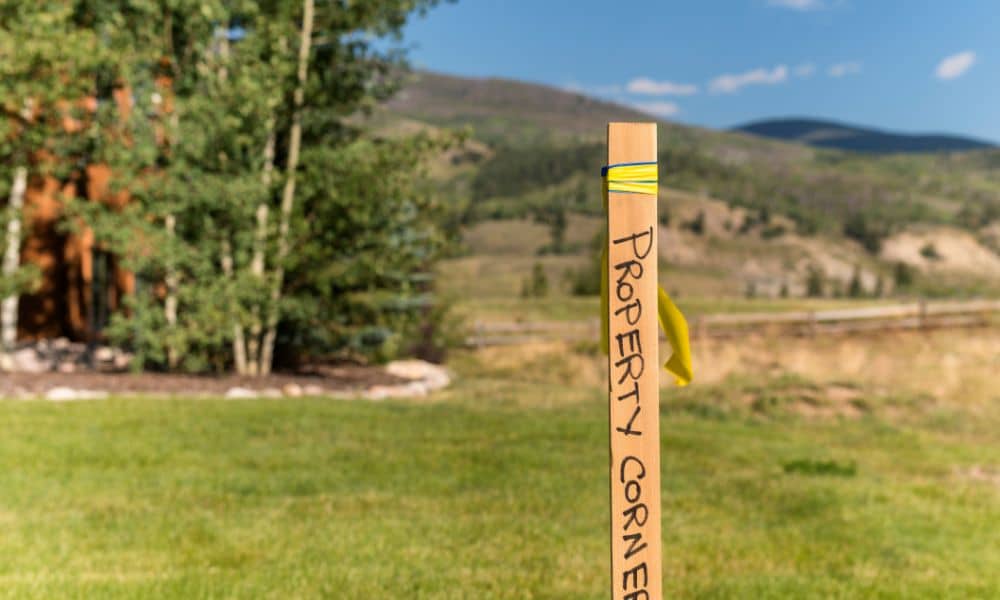
However, land surveying brings the focus back to facts. A licensed surveyor marks the true boundary on the ground. Stakes or flags show the line clearly. After that, both parties see the same reference.
In many cases, the conflict cools right away. Clear markings replace assumptions. Even when tension remains, solid land surveying evidence supports legal action if needed.
What a Surveyor Documents That Strengthens Your Case
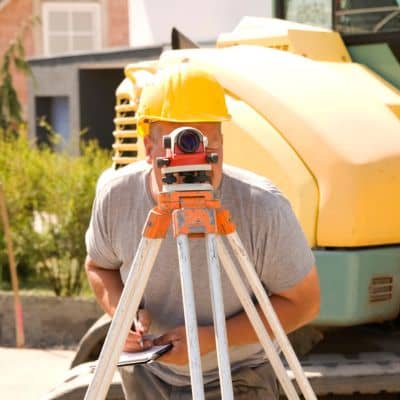
Professional land surveying creates more than a line on the ground. It creates a full record. That record strengthens your position.
A surveyor documents recovered monuments, measurement methods, and record sources. They produce a signed survey map that shows distances and bearings. They also note encroachments like fences, sheds, or driveways that cross lines.
In addition, licensed surveyors seal their work. That seal carries legal weight. It shows professional responsibility and standard methods. Because of that, courts and title companies trust it.
So when a dispute grows serious, this documentation matters far more than opinions or screenshots.
What You Should Do Before the Conflict Grows
Early action prevents bigger problems. Therefore, do not wait until tempers explode.
First, find your deed and closing papers. Next, check if you received a prior survey at purchase. Many owners forget they already have one.
Then walk your property. Look for corner markers or pins. Take photos, but do not move anything. Disturbing markers can create legal trouble.
After that, talk calmly with your neighbor. Tell them you want clarity, not conflict. If uncertainty remains, call a land surveying professional. A shared survey often costs less than a legal fight later.
Why Land Surveying Often Saves Money
Some owners avoid surveys because of cost. However, disputes usually cost more.
A misplaced fence can require full removal and rebuild. Tree disputes can lead to damage claims. Encroachments can delay property sales. Meanwhile, attorney fees rise quickly once lawyers join the conversation.
In contrast, land surveying sets facts early. Clear facts prevent wrong construction and bad assumptions. Therefore, many owners save money by ordering a survey before problems grow.
Think of it as prevention, not expense.
How to Talk About Survey Results Without Making Things Worse
Even with strong evidence, delivery matters. Tone can either calm or inflame.
Start with neutral language. Say, “I ordered a survey so we both have clarity.” Then show the marked line and the survey map. Focus on resolution, not blame.
Also, invite questions. People accept facts more easily when they feel included. If needed, suggest a joint meeting with the surveyor. That step builds trust.
Above all, avoid personal attacks. Let the land surveying evidence speak for itself.
The Proof That Ends the Argument
Neighbor disputes feel messy because opinions clash. Maps disagree. Memories differ. However, real land surveying cuts through the noise.
Legal descriptions, recovered monuments, field measurements, and certified survey maps form the evidence that holds up. Everything else — screenshots, guesses, and old fences — only adds confusion.
So when a boundary question appears, do not argue louder. Instead, get better proof. Land surveying evidence wins disputes because it replaces belief with fact.