
If you’ve been waiting on an ALTA Title Survey, you may have noticed that things are moving slower than usual. Reports are taking longer. Projects that should be finished by now are still on hold. The reason isn’t your surveyor—it’s the federal government.
Since the government shutdown on October 1, 2025, many national services have stopped or slowed down. One of those is OPUS, the Online Positioning User Service run by NOAA. OPUS helps surveyors check and confirm GPS data for every property they map. When OPUS stops working right, it creates a chain reaction that reaches all the way to your real-estate closing table.
Why OPUS Matters for Every ALTA Title Survey
An ALTA Title Survey is a detailed type of land survey used for buying, selling, or financing commercial property. It shows where the land begins and ends, along with easements, driveways, and buildings. Lenders and title companies depend on it to make sure a property’s legal description matches what’s actually on the ground.
To get that accuracy, surveyors collect GPS data in the field and upload it to OPUS. The system checks the information against official national coordinates. It’s like double-checking a math problem before turning it in.
When OPUS slows down, surveyors can’t confirm their results right away. That means the survey stays unfinished until the data is approved. For property owners, lenders, and lawyers, this can delay closings, loan approvals, and even construction plans.
What’s Going On Since the Shutdown
During the shutdown, most NOAA and NGS staff were sent home. Websites still work, but updates are limited. That means OPUS requests can sit for days before getting processed.
Across the U.S., surveyors are talking online about OPUS reports stuck in “pending” status. Some say their results haven’t come back after a full week. Normally, OPUS handles submissions in a few hours.
Because of this, ALTA Title Surveys that should take two weeks may now need three or more. Every extra day can affect deadlines for real-estate closings and project funding.
Why Rochester Projects Are Feeling It
In Rochester and Monroe County, precision matters a lot. Local surveyors often use OPUS to tie their field data to the Monroe County Geodetic Survey (MCGS)—a network of more than 5,000 control monuments spread across the county. These marks link local maps to the national coordinate system, making sure everything lines up correctly.
When OPUS slows, it becomes harder to check that link. For a city full of commercial buildings, new developments, and refinances, that can cause real trouble. A single missing coordinate can delay an ALTA Title Survey, and that can push back a closing date or stall a construction start.
The Domino Effect on Closings and Construction
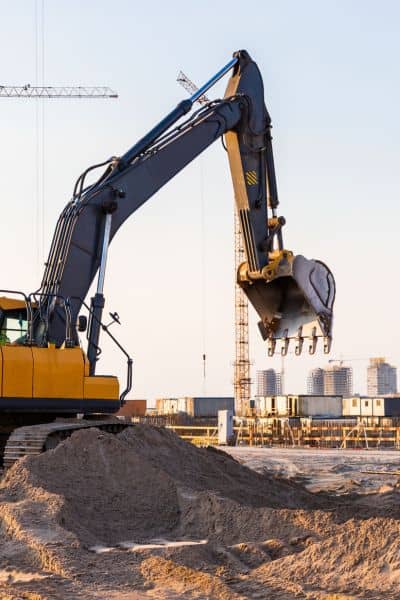
A delay in surveying might sound small, but it affects every part of a project. When surveyors can’t finish their reports, engineers can’t finish designs. Lenders can’t release funds. Builders can’t start digging.
Here’s what property owners might see:
- Closings pushed back because title companies need updated survey maps.
- Loan reviews delayed until survey data is verified.
- Construction schedules moved around to wait for final coordinates.
It’s like a traffic jam—one slowdown at the front causes a line of stopped cars behind it.
How Rochester Surveyors Are Solving the Problem
Even with OPUS down, surveyors aren’t giving up. They’re finding smart ways to keep working and protect their clients’ timelines.
- Using Monroe County’s Monument Viewer The county has an online map of geodetic control points. Surveyors can check this viewer to find reliable monuments near their sites and use those as reference points.
- Pulling Local Record Sheets Many surveyors have archives of Permanent Survey Marker (PSM) sheets. These include exact coordinates and elevations that can be used while OPUS is slow.
- Using Alternate GPS Processing Systems Services like CSRS-PPP in Canada and AUSPOS in Australia let surveyors process their GPS data outside the U.S. These backups give almost the same accuracy as OPUS.
- Writing Clear Notes Every professional surveyor explains what method was used. A common note might read:
“Control was established using county monuments and temporary PPP processing due to OPUS delays during the October 2025 shutdown. Final OPUS confirmation will follow once available.” This lets title companies and lenders know the data is still valid and will be confirmed later.
With these tools, most local teams can finish their ALTA Title Surveys on time—even when national systems are offline.
What Property Owners and Lenders Should Do
If you’re waiting on a survey, the best move is to talk with your surveyor early. Ask how the OPUS delay might affect your project and what backup plans they’re using.
Also, order your ALTA Title Survey early—right after the title commitment comes out. Early scheduling gives your surveyor time to work around any slowdowns. It also means you’ll spot problems sooner, before they cause last-minute stress.
A good surveyor will keep you updated and explain any extra steps needed. Clear communication keeps deals moving, even when outside systems are stuck.
The Lesson: Local Data Keeps Things Moving
This OPUS issue shows how important local control systems really are. When a federal service goes down, cities with strong local data—like Rochester—can keep going.
Monroe County’s MCGS network is a great example. Because it holds thousands of permanent benchmarks, surveyors can check their work without waiting for Washington to reopen. That kind of backup is what keeps projects steady during national slowdowns.
For the surveying world, the big takeaway is simple: always have a Plan B. Redundant data and multiple control sources are what keep jobs moving and clients happy.
Wrapping Up
The federal government may be paused, but your project doesn’t have to be. Surveyors are proving that local knowledge and creative planning can beat delays.
If you’re in real estate, engineering, or development, stay proactive. Check in with your surveyor, plan your timelines carefully, and make sure your team is using local monument data until OPUS speeds up again.
Your ALTA Title Survey is still possible—it just takes a little more teamwork right now.