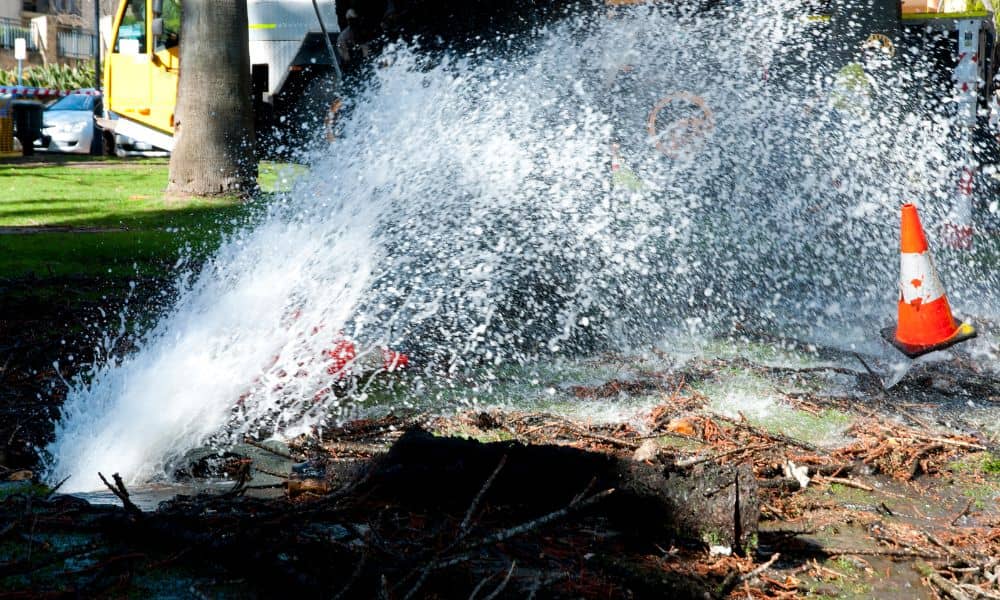
When a city suddenly loses water, people ask the same question right away: How did this happen? In many recent cases, the answer points to aging pipes, unclear records, and gaps in how cities understand what sits underground. That is why lidar mapping is now getting serious attention from city planners, engineers, and surveyors across the country.
Over the past few days, a major water main failure in Waterbury, Connecticut shut down service for large parts of the city and forced emergency repairs. Around the same time, Rochester, New York dealt with its own downtown water main break near Exchange Boulevard and the Blue Cross Arena. These events may seem sudden, but they rarely come out of nowhere. Instead, they expose a deeper issue: cities often do not have a clear, accurate picture of what lies beneath their streets.
When pipes fail, maps become urgent
Water mains usually sit underground for decades. Over time, roads get rebuilt, utilities move, and repairs happen in stages. As a result, original drawings slowly stop matching reality. Even well-kept records can fall behind when changes happen faster than updates.
Because of this, many cities rely on maps that show where pipes should be, not where they actually are. During normal conditions, that gap stays hidden. However, when a pipe breaks in winter or during peak demand, the problem becomes public right away. Streets close, businesses lose water, and repair crews rush in with limited information.
At that point, accurate mapping stops being a technical detail. Instead, it becomes a public safety issue.
Why water main breaks are rarely random
It is easy to think water main failures happen by chance. In reality, they follow patterns. Most breaks occur where pipes face stress from freeze-thaw cycles, soil movement, or nearby construction. Older cities in the Northeast, including Rochester, face all three.
Over time, utility records drift away from reality. Repairs get logged loosely. Pipe materials change. Depths shift. Sometimes, old lines get abandoned without clear notes. Each small change adds uncertainty.
Eventually, that uncertainty reaches a breaking point. When crews dig, they often find pipes that do not match the map. That mismatch slows repairs and increases damage. As cities review these failures, many realize the issue is not just old pipes. The real issue is incomplete knowledge.
Why GIS maps alone are not enough
Many people assume cities already have detailed maps of everything underground. While most cities do use GIS systems, those maps often focus on location and ownership, not survey-grade accuracy.
GIS maps work well for planning and reference. However, they do not replace precise measurement. They also rely heavily on legacy data. If that data starts wrong, the map stays wrong.
This is where modern surveying tools enter the picture. Cities now want data that reflects real-world conditions, not just historical drawings. As a result, they are looking for ways to improve how surface and subsurface information connects.
How LiDAR mapping supports better infrastructure decisions
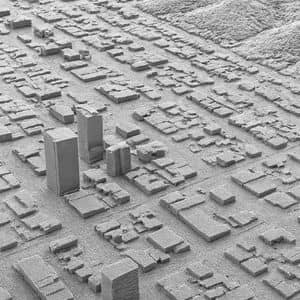
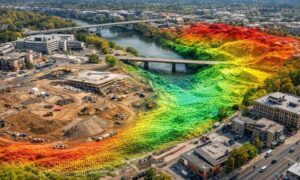
LiDAR mapping uses laser pulses to measure the ground and nearby features with high detail. From the air, it creates a precise 3D model of streets, terrain, and structures. While it does not see through the ground, it plays a key role in understanding what happens above and around underground systems.
For example, LiDAR helps cities spot subtle surface changes that may point to soil movement or drainage issues. It also supports accurate elevation data, which matters for pipe slopes, water flow, and frost impact. When paired with survey control, LiDAR creates a reliable base layer for infrastructure planning.
Because of this, many cities now see LiDAR as a planning tool, not a luxury. It helps teams ask better questions before emergencies happen. It also reduces guesswork during design and repair projects.
Locates versus surveyed utility mapping
At this point, it helps to clear up a common confusion. Utility locates and surveyed utility mapping serve different purposes.
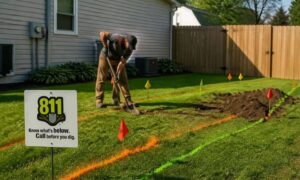
Utility locates exist for safety. They show approximate locations so crews avoid striking lines during excavation. They do not aim for long-term accuracy or detailed documentation.
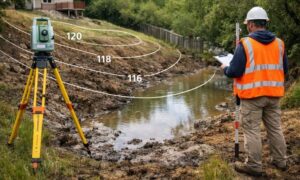
Surveyed utility mapping, on the other hand, records utility positions using measured data tied to known control points. This information supports planning, design, and future work.
LiDAR mapping does not replace either one. Instead, it supports better decisions when used with surveyed data. Together, they reduce surprises and improve coordination.
Why Rochester feels this issue more than most
Rochester has many traits that increase risk. Much of the infrastructure dates back decades. Winter weather stresses pipes each year. Downtown density limits access during repairs. Meanwhile, records often span multiple generations of systems.
Because of this, even a small data gap can cause major delays. When a break happens, crews work under pressure with limited room for error. That reality makes proactive mapping more valuable than ever.
City agencies, property owners, and facility managers all share the same challenge. They need accurate information before problems arise.
What property owners and facility managers can do now
While cities lead large infrastructure efforts, private owners also play a role. Before starting construction, renovations, or utility upgrades, owners should ask questions about existing records. Relying only on old drawings can lead to delays and extra costs.
For larger sites, LiDAR-supported mapping tied to survey control helps teams plan smarter. It also supports coordination between engineers, surveyors, and contractors. Over time, this approach reduces risk and saves money.
The goal is not to map everything at once. Instead, it is to improve knowledge step by step, before emergencies force rushed decisions.
Infrastructure stays invisible until it fails
Water main failures remind cities of a simple truth. Infrastructure stays out of sight until something goes wrong. When it does, missing information becomes the biggest obstacle.
That is why cities now rethink how they document and understand what lies beneath their streets. LiDAR mapping plays a growing role in that shift. It does not replace traditional surveying or utility records. However, it strengthens them.
In the end, better data leads to fewer surprises. And when the next winter freeze hits, that preparation can make all the difference.