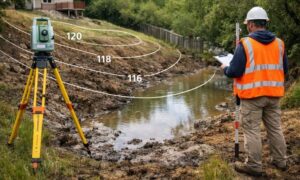
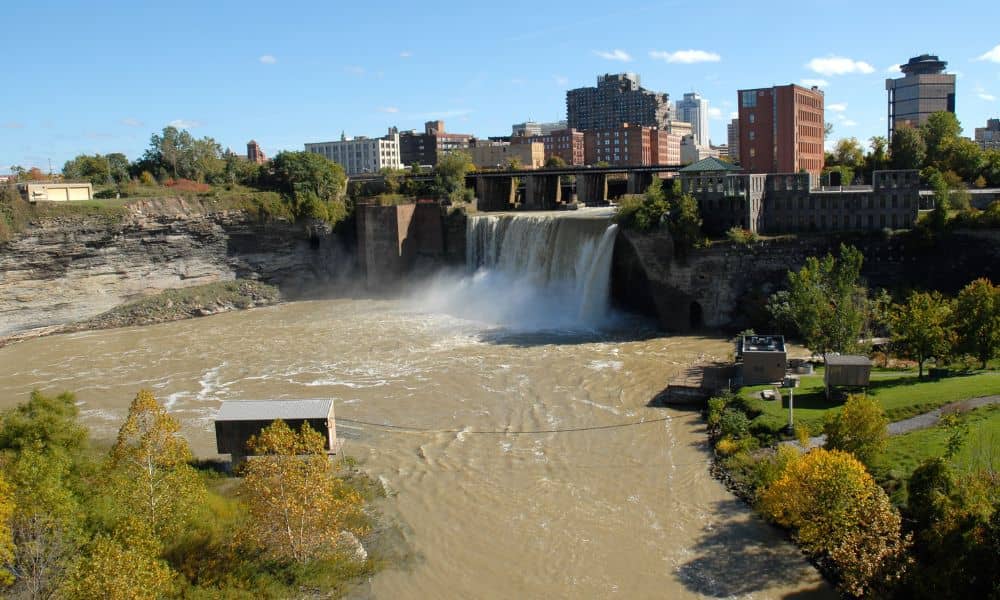
Every spring, people in Rochester start watching the Genesee River a little more closely. Snow melts. Ice breaks apart. Water moves faster. Then someone posts a photo of high water near High Falls, and suddenly everyone feels uneasy. You might think, “I’m not right on the river. I’m fine.” However, river flooding doesn’t always stop at the shoreline. When the Genesee River rises, what truly matters is not how close you live to it. What matters is how high your home sits compared to the water. That’s where an elevation survey becomes important.
When the River Rises Fast
In Rochester, flooding doesn’t always come from heavy rain alone. Ice jams can block parts of the river. When that happens, water backs up quickly. As a result, river levels can jump in a short time.
Bridges, bends, and narrow sections of the river can make the problem worse. Water has nowhere to go. So instead, it spreads outward.
Meanwhile, many homeowners assume flood maps tell the full story. They don’t. Flood maps show risk zones based on long-term models. However, they cannot predict every ice jam or surge event.
Therefore, if river levels climb even a foot higher than expected, that extra water needs space. Sometimes, that space ends up near homes that never flooded before.
“I’ve Never Flooded Before” Isn’t a Plan
Many property owners say the same thing: “I’ve lived here for 15 years and never had water in my basement.”
That may be true. Still, past performance does not guarantee future safety.
Weather patterns have shifted. Ice movement has changed. Development around the city has altered drainage paths. Because of this, homes that once felt safe may now sit closer to risk than owners realize.
In addition, many Rochester homes have basements. Some homeowners finish those basements for extra living space. That makes knowing your elevation even more important.
An elevation survey answers one key question: How high is your structure compared to projected flood levels?
Without that number, you are guessing.
What an Elevation Survey Really Does
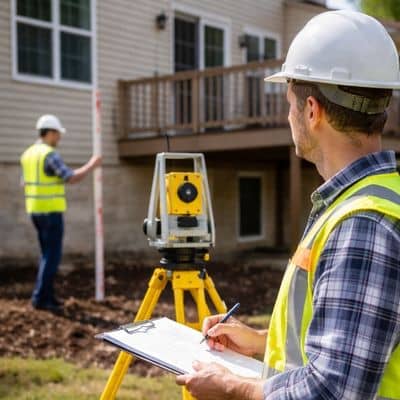
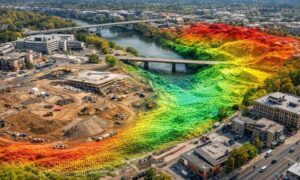
An elevation survey measures the vertical position of your home in relation to flood levels set by FEMA. It does not rely on rough estimates or online maps. Instead, a licensed land surveyor visits your property and collects precise field data.
The survey identifies:
- The height of the lowest floor
- The ground level around your foundation
- How your structure compares to the Base Flood Elevation (BFE)
In simple terms, it tells you how much vertical buffer you have between your home and rising water.
For example, if your lowest floor sits two feet above the projected flood level, you have space. On the other hand, if it sits just a few inches above, you face higher risk during surge events.
That difference matters.
Why Distance From the River Can Be Misleading
You do not need riverfront property to experience flood impact.
Backwater can travel into side streets. Storm systems can overflow. Low-lying pockets in neighborhoods can collect water faster than expected.
Furthermore, some homes sit slightly downhill compared to nearby properties. That small slope may not seem important on a dry day. However, during a surge, it can change how water moves.
An elevation survey focuses on structure height, not visual appearance. Your yard might look level. Your street might look safe. Still, elevation numbers tell the real story.
Flood Alerts Create Panic — But Data Brings Control
When flood warnings appear, phones start ringing.
Homeowners call insurance agents. Buyers pause closings. Contractors delay projects. Everyone wants answers fast.
Unfortunately, the worst time to order an elevation survey is during an active flood alert. Surveyors book quickly. Decisions feel rushed.
Instead, smart property owners prepare before the next surge.
With elevation data in hand, you can:
- Understand your real exposure
- Plan basement improvements wisely
- Move utilities higher if needed
- Feel confident during heavy thaw seasons
Rather than reacting in fear, you act with knowledge.
Flood Zone vs. Structure Height
Many people confuse flood zones with guaranteed flooding.
A flood zone shows probability. It does not confirm your home will flood. At the same time, being outside a mapped zone does not promise safety.
That’s why an elevation survey matters.
Two homes can sit in the same flood zone. Yet one may sit three feet higher than the other. That higher home carries less structural risk.
Without measuring, you would never know.
In Rochester, where river levels change with ice movement and snowmelt, structure height often matters more than zone color on a map.
Who Should Consider an Elevation Survey?
You should think about an elevation survey if:
- Your home sits near the Genesee River corridor
- You live near a creek or tributary
- You plan to finish or renovate a basement
- You recently purchased a property in a flood-prone area
- You simply want clarity before spring thaw season
Even if your home has never flooded, knowing your elevation gives you confidence.
Additionally, buyers often feel more comfortable when sellers provide elevation documentation. That transparency can smooth negotiations and reduce surprises.
The Cost of Not Knowing
Water damage repairs cost thousands of dollars. Mold removal adds more. Lost personal items add stress.
However, financial loss is only part of the problem. The emotional toll of watching water approach your foundation can feel overwhelming.
Without an elevation survey, you rely on assumptions. You wait and hope. You react instead of prepare.
On the other hand, when you know your numbers, you gain control.
You can plan upgrades. You can elevate utilities. You can explore flood barriers. Most importantly, you stop guessing.
The River Will Rise Again
The Genesee River has shaped Rochester for generations. It brings beauty, history, and power to the city. Yet it also brings seasonal uncertainty.
Ice jams will happen again. Snow will melt again. River levels will climb again.
The question is not whether the river will rise. The question is whether you understand how your home stands against it.
An elevation survey does not stop water. However, it gives you clarity. It replaces fear with facts. It helps you make smart decisions before the next flood alert flashes across your phone.
If you live in Rochester and wonder how safe your property truly is, now is the time to measure, not guess.
Because when the Genesee River rises, knowing your elevation makes all the difference.