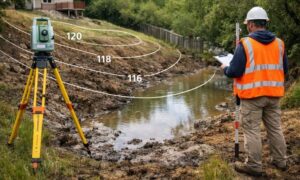
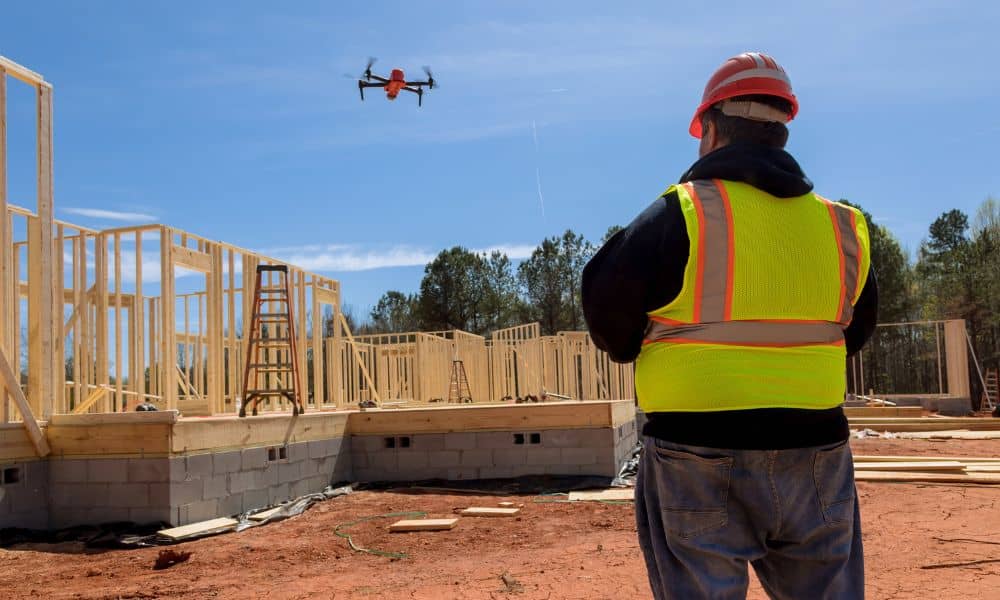
Not long ago, most site surveys started the same way. A crew showed up with total stations, GPS gear, and a lot of walking ahead of them. That method still works. However, the pace of development has changed. Investors want answers faster. Engineers want cleaner data earlier. Contractors want fewer surprises. Because of that shift, aerial surveying is quickly becoming the baseline for modern site development. Across the world, governments and private firms now use high-speed GNSS networks and advanced positioning systems to map land faster than ever. While that sounds technical, the message is simple: speed and precision now set the standard. And aerial surveying sits right at the center of that change.
So what does that actually mean for you as a property owner, developer, or builder?
Development Is Moving Faster — So Surveying Has To Keep Up
Modern projects move quickly. In many cases, land trades hands before a full design even begins. Meanwhile, lenders expect clear site data during due diligence. At the same time, engineers need surface models before they finalize grading plans.
Traditionally, collecting topographic data on a large tract could take days or even weeks. Crews had to walk the entire site. Thick vegetation slowed them down. Wet ground created delays.
Now, aerial surveying changes that rhythm.
With drones, fixed-wing aircraft, and LiDAR sensors, surveyors capture thousands of elevation points per second. Instead of sampling the ground every few feet, aerial systems scan entire surfaces in one coordinated flight. As a result, engineers receive a dense, detailed surface model much earlier in the process.
That early clarity changes everything downstream.
What Makes Aerial Surveying Different?
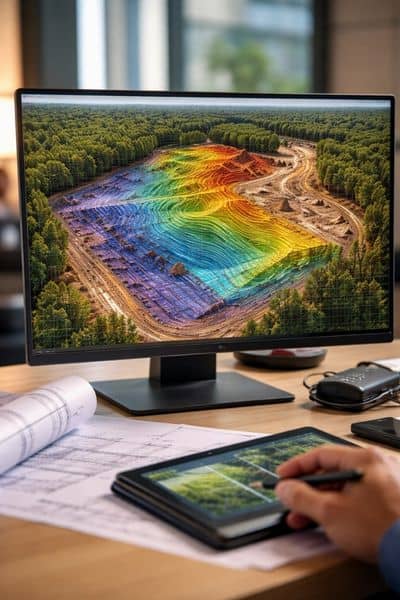
One of the biggest advantages of modern aerial surveying is how quickly large areas can be covered. What once took several field days to map can now be captured in just a few hours. That speed comes from professional teams using advanced drones and equipment that deliver accurate results efficiently — giving developers, engineers, and property owners the data they need much sooner.
Another key difference is the level of detail. Instead of isolated points, aerial surveys create a full digital terrain model. That means slopes, swales, drainage paths, and subtle elevation changes are all visible across the property — insights that are essential for planning grading, managing runoff, and avoiding costly mistakes later.
Finally, aerial data integrates seamlessly with GNSS control systems. Surveyors still set ground control points to ensure accuracy, but once everything is combined, the resulting maps reflect real-world precision. The data from these surveys doesn’t replace traditional methods, but it strengthens them — giving everyone involved a clearer picture before construction even begins.
Why Developers Are Starting With Aerial First
Developers are increasingly using aerial surveying right from the start instead of waiting until later in the project. Early on, engineers need to see how water flows across a site — whether it drains toward a future building pad or pools in low spots — because that affects foundations, grading, and stormwater planning.
These days, teams often pair aerial surveying with drone LiDAR mapping, which captures the land’s elevations in incredible detail. With this kind of data, engineers can test different layouts early, tweak lot designs, and plan roads or building footprints before committing to expensive construction work.
Lenders and investors appreciate it too. Instead of relying on rough sketches, they get measurable, reliable data that shows how the property actually behaves. By looking at the land with this high-resolution perspective, developers can avoid surprises, reduce costly revisions, and move forward with confidence.
Fewer Surprises During Construction
Construction rarely follows a perfect script. However, strong site data lowers the risk of major setbacks.
When contractors begin grading without a clear understanding of terrain, problems appear quickly. They may discover hidden elevation shifts. They may misjudge cut-and-fill volumes. They may even hit unexpected drainage patterns.
Aerial surveying improves surface modeling before the first machine mobilizes. Engineers calculate earthwork volumes more accurately. Contractors plan equipment use more effectively. Owners see fewer change orders tied to grading errors.
Therefore, aerial surveying supports smoother construction from the very beginning.
But Here’s What Aerial Surveying Does NOT Replace
It is important to stay grounded.
Aerial surveying does not replace a boundary survey. Legal property lines still require monument recovery and verification on the ground.
It does not replace construction staking. Builders still need precise layout points set by a licensed land surveyor.
It does not confirm underground utilities. Surface data cannot see buried infrastructure without additional tools.
However, when used correctly, aerial surveying strengthens all those services. It gives the surveyor and engineer a strong foundation before detailed work begins.
When Aerial Surveying Makes the Most Sense
Large undeveloped tracts benefit the most. Subdivision planning, commercial sites, and industrial parcels all gain value from early aerial mapping.
Flood-prone areas also benefit. High-resolution elevation data helps teams analyze how water flows across the property. That insight shapes smarter grading and stormwater design.
Additionally, properties with uneven terrain gain major advantages. Hills, wooded areas, and remote parcels become easier to evaluate with aerial systems.
On the other hand, tight urban lots may rely more heavily on ground-based surveys. In those cases, aerial surveying plays a supporting role rather than the lead.
The key is strategy. Start with the right tool for the right stage.
Client Expectations Are Changing
Because aerial surveying spreads across the industry, clients now expect faster turnaround times. They assume fewer unknowns. They want early answers.
That expectation creates both opportunity and responsibility.
Survey firms must integrate aerial data carefully. Engineers must interpret it correctly. Developers must understand its limits.
When all parties align, projects move more smoothly. When teams misunderstand the scope, confusion follows.
Therefore, communication matters just as much as technology.
The Bigger Picture: The Baseline Has Shifted
Across the globe, survey modernization continues. GNSS networks expand. Drone technology improves. Data processing speeds increase. Each advancement pushes the industry forward.
Aerial surveying now sets the tone for early-stage site analysis. It delivers broad visibility quickly. It supports smarter planning decisions. It reduces downstream correction.
Most importantly, it changes the starting line of development.
Instead of asking, “Can we afford aerial surveying?” many developers now ask, “Can we afford to skip it?”
That shift speaks volumes.
Final Thoughts
Modern site development demands clarity early. It demands speed without sacrificing accuracy. It demands data that supports real decisions.
Aerial surveying answers those demands when used correctly. It does not replace traditional surveying. Instead, it strengthens the entire workflow from feasibility to construction.
If you plan a new project, think about where clarity matters most. The sooner you understand your land, the stronger every decision becomes.
In today’s development climate, aerial surveying does not feel optional. It feels foundational.