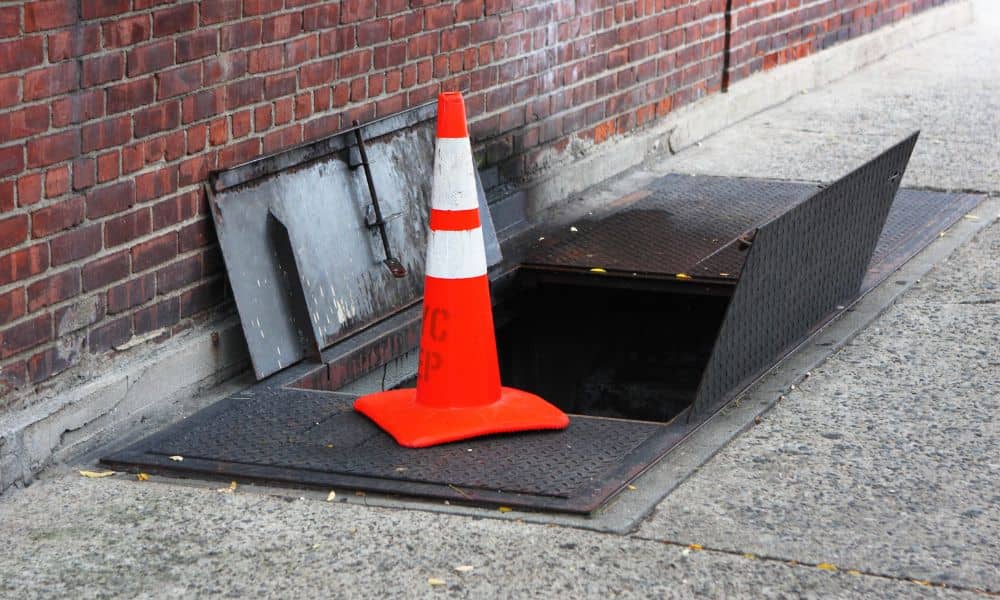
A sidewalk vault can add real space to a New York City building. It might hold storage, a boiler room or part of a cellar that runs out under the public walk. Before you buy, lend on or redevelop that property, an ALTA title survey helps you see whether the vault on the ground matches the rights on paper.
The space under a city sidewalk works differently from the rest of the lot. The city controls the street and the sidewalk. An owner’s use of the space below typically rests on a vault license or a revocable consent from the NYC Department of Transportation (DOT). A buyer needs to know what right supports the vault and whether the survey places the vault where that right says it should be.
Start With the Recorded Rights Behind the Sidewalk Vault
Start by gathering every document that grants or mentions the vault. That can include a DOT vault license, a revocable consent, deed language, a recorded agreement and the exceptions in the title commitment. The surveyor needs these before field work starts so the drawing can show each item in its correct spot.
The title commitment is the title company’s list of what it will and won’t insure. Its Schedule B lists exceptions, and a vault license or related agreement may appear there. Under the current ALTA/NSPS standards, which took effect February 23, 2026, the surveyor works from the complete, most recent commitment and plots the recorded matters that a surveyor can locate on the ground.
Not every vault right shows up in the city’s land records. Some approvals live in agency files instead. Ask the seller early for copies of any license, consent or DOT approval, and share them with both the title company and the surveyor.
Compare the Vault Rights With the Surveyed Property Limits
An ALTA title survey shows where the property line runs and where the building face meets the sidewalk. A vault under the sidewalk sits outside that line. The survey should show the vault as a feature beyond the lot, measured from the property line and the curb line.
This step matters because a drawing can blur owned land and licensed space. Someone who skims a site plan may assume the cellar under the walk belongs to the lot. A clear survey labels the vault area, shows how far it reaches toward the curb and marks the hatches, gratings or sidewalk doors above it.
NYC’s highway rules already expect exact measurements here. Before an owner covers a new vault, the rules call for a licensed surveyor to certify its area and show where it sits in relation to the building, the curb line and the nearest street corner. Older vaults may or may not have that kind of record, so the ALTA field work can fill the gaps.
The vault’s edge can also hint at the type of approval behind it. A standard vault license can’t cover a vault that reaches past the curb line. A vault that extends farther than that needs a revocable consent, so the measured limits tell the team which document to look for.
Check Whether the Vault Rights Match the Transaction Documents
Once the survey shows the vault, compare it with every document in the deal. The contract, the leases, the title commitment and the city’s records should all describe the same space. Gaps tend to show up in a few places:
- The license lists a smaller area than the survey measures
- The purchase contract or rent roll counts vault space as building area
- A lease gives a tenant cellar space that runs under the sidewalk
- The title commitment says nothing about a vault the survey plainly shows
- The city’s annual vault charge doesn’t reflect the vault’s current size
Each mismatch is a question for the right professional. The surveyor reports what the field work shows. The title company decides how to handle it in the policy, and the buyer’s attorney decides what the contract should say.
Consider Vault Rights Before Renovation or Redevelopment
Building plans can change how a vault right works. A new foundation, a deeper cellar, new sidewalk hatches or a larger footprint may all touch the vault. DOT requires a vault license to build a new vault or enlarge an existing one, and most vault work also needs Department of Buildings approval.
The ALTA title survey gives the design team a clean starting point. It shows where the licensed space ends, where the property line runs and what sits in the sidewalk above. Architects and engineers can then plan around the vault’s legal limits as well as its physical walls.
Other agencies may get involved too. Work on a vault in a historic district can need Landmarks Preservation Commission review, and a vault near a subway entrance can bring in the MTA. If a project plans to stop using a vault, DOT can order the owner to fill it in, so that decision belongs in early planning.
Decide When an ALTA Title Survey Should Be Part of Due Diligence
Order the ALTA title survey early when a vault affects value, financing or future plans. A lender or title company may require one for a commercial deal anyway. A vault gives you extra reason to set the scope with care.
Tell the surveyor about the vault when you place the order. Ask that the drawing show the vault limits, sidewalk openings, the curb line and any license area that can be plotted. Some of these items may fall under Table A, the list of optional items a client can add to an ALTA survey, so confirm the scope in writing.
Timing matters as well. A survey that lands days before closing leaves little room to fix a license gap or a missing title exception. Confirm survey needs early with your lender, title company and attorney, and leave time for questions.
Frequently Asked Questions
Can a sidewalk vault right be transferred when a property is sold?
That depends on how the city granted the right and what the grant says. Some approvals may pass with the building, while others carry conditions that call for city action. An attorney should read the actual license or consent and confirm what happens at the sale.
Does a sidewalk vault right automatically mean the owner controls the space below the sidewalk?
No. A license or consent is permission from the city to use public space for a set purpose. The city keeps its interest in the street, and a revocable consent can end under its own terms.
Can a sidewalk vault affect a property’s title insurance coverage?
Yes, it can. If the commitment lists the vault or a related document as an exception, the policy may not cover losses tied to it. A buyer can ask the title company whether an endorsement or extra policy language fits the situation.