
A recent news story about a land survey fraud case made headlines for all the wrong reasons. A survey agent was accused of taking bribes to alter land records, changing boundaries on paper for personal gain. While this case happened overseas, the reaction was global. Buyers, developers, and lenders everywhere had the same thought: If land records can be manipulated there, could it happen here too? That question matters because property deals rely heavily on trust. This is exactly why alta land title surveys play such a critical role in real estate transactions, especially when large sums of money are involved.
When “Official Records” Are Not the Full Story
Most buyers assume that if something appears in public records, it must be accurate. After all, deeds, plats, and title documents look official. They feel reliable. However, this assumption creates risk.
Land records come from people. People measure land. People interpret old descriptions. And sometimes, people make mistakes—or worse, take shortcuts. Fraud cases bring this reality into sharp focus, but errors happen far more often than criminal acts.
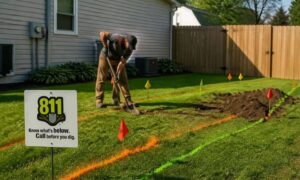
Because of that, buyers face a real danger. They trust records without asking whether those records still match what exists on the ground today. Over time, fences move, roads shift, and parcels get divided. Meanwhile, paperwork does not always keep up.
Why Fraud and Errors Hurt Buyers the Same Way
From a buyer’s point of view, intent does not matter. Fraud and honest mistakes create the same outcome. The buyer inherits the problem.
For example, a shifted boundary can trigger disputes with neighbors. A missing access easement can block future development. An encroachment can stop a loan from closing. In every case, the buyer pays the price.
That is why survey fraud stories resonate so strongly. They expose a hard truth. Buyers often find problems only after closing, when fixing them costs far more time and money.
Where ALTA Land Title Surveys Step In

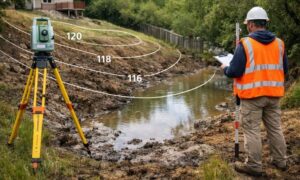
This is where ALTA Land Title Surveys change the game. They act as an independent layer of verification between what the records say and what exists on the site.
Instead of trusting one source, these surveys compare multiple pieces of information. They look at title documents, physical conditions, and legal descriptions together. As a result, inconsistencies rise to the surface early, when buyers still have options.
Even more important, ALTA surveys create accountability. Several professionals rely on the same document. Surveyors, title companies, lenders, and attorneys all review the results. That shared review process makes it much harder for bad data to slip through unnoticed.
Trust Fails When No One Double-Checks
Fraud thrives in systems where no one asks questions. The same applies to property deals. When buyers skip independent verification, they rely on blind trust.
An ALTA survey does not assume records are correct. Instead, it tests them. That mindset matters. It turns the survey into a safeguard rather than a formality.
In the fraud case that made the news, altered records passed through the system because no one challenged them. That scenario highlights why verification must exist outside the record itself.
Why Ethical Standards Matter in Surveying
Technology helps surveyors measure land with incredible accuracy. However, tools alone cannot guarantee trust. Ethics and licensure still matter.
Licensed land surveyors carry legal responsibility for their work. Their license ties them to professional standards and liability. That structure protects buyers. When survey work lacks accountability, risk increases.
Cut-rate or rushed surveys often skip deeper reviews. While they may look fine at first glance, they leave buyers exposed. In contrast, ALTA surveys demand care, documentation, and professional judgment.
Why This Hits Close to Home
Buyers face unique challenges. Many properties here have long histories. Parcels changed hands decades ago, sometimes with vague descriptions. Urban redevelopment adds another layer of complexity.
In Monroe County, older records often overlap with modern use. As buildings change purpose and lots get reconfigured, small inconsistencies can grow into serious issues. Because of that, buyers depend heavily on verification, not assumptions.
A fraud case abroad may feel distant. Still, the lesson applies locally. The more complex the history, the greater the need to confirm that paper and reality still align.
The Real Lesson for Property Buyers
This story is not about fear. It is about the process. Smart buyers understand that trust must be earned through verification.
ALTA surveys do not exist because deals lack honesty. They exist because property transactions involve risk. Every layer of review reduces that risk.
Buyers who rely only on records take a gamble. Buyers who invest in verification protect themselves.
Seeing ALTA Surveys as Risk Management
Many people think of surveys as paperwork needed for closing. That mindset misses the point. An ALTA survey works more like insurance against unknowns.
It helps buyers spot issues early. It supports informed decisions. And it strengthens confidence at closing.
In a world where even official records can be wrong, verification becomes the real currency of trust.
Final Thoughts:
The recent survey fraud case made waves because it challenged a basic belief. It showed that records alone cannot guarantee truth.
For buyers, the takeaway is clear. Due diligence must go beyond surface-level checks. Independent verification protects investments and reputations.
ALTA Land Title Surveys do more than support transactions. They protect buyers from what records may fail to reveal. In real estate, that protection makes all the difference.